
Source: Initiatives for Legal Diversity & Inclusion at SF Summit
Author Archives: maureensf
Working While Mobile

Mobility in the enterprise has taken off and it’s headed only in one direction. I’ve read the hand-wringing in the press about the lagging adoption of enterprise mobility. I suppose that it makes for provocative headlines. But that’s not what we are experiencing in our business as an enterprise mobility solutions provider. We see professional services organizations moving forward with requirements, timelines, and budget.
They can’t wait any longer. The business demands it.
Beyond Email, At Last
For years the concern has been that enterprise mobility had not moved beyond Email, Contacts, and Calendar. Fortunately, a couple of leading enterprise software companies have shared their real-world data and colorful charts. Let’s take a look at the data.
Good Technology’s “Mobility Index Report” for Q2 2015 shows that their typical customer has deployed 3.43 apps in addition to Email.

The Secure Browser is the leading application (after Email) with strong adoption in high tech, insurance, and manufacturing.

Okta, the rapidly growing cloud-based identity management company, has a rare view of enterprise applications because they have data on logins to cloud and mobile apps. They looked at 2,500 customers over 4,000 apps and millions of daily logins. Okta published the key findings in “Okta’s Businesses @ Work Report” for 2015.
The chart below shows the percent of users logging in from mobile devices across industries over the preceding 30 days. Education leads the way with over 35% of logins from mobile devices. Retail is second at near 28%. Six more verticals are at or over 20% of logins from mobile devices. These figures show mobile usage which is well beyond the early adopter stage. They indicate significant adoption.

Platform Usage Illustrates the Enterprise Story
We can see the platform shift in the chart below, compiled by Benedict Evans. People are increasingly using smartphones and tablets to reach the internet. While this is not enterprise data, it illustrates a key point driving enterprise mobility. What is the device which professionals will have with them at nearly all times? Their smartphones.

Businesses Can’t Afford to Lag
CSS Insights reports, “Competition today is rapidly changing and is being fueled by digital technology. The “Uber threat”, in which agile start-ups like Uber, Netflix and Airbnb quickly overturn established industries, has become a concern in many boardrooms…In this new environment, CIOs and business leaders are facing greater pressure to initiate the changes needed to put digital and mobility innovation at the heart of any competitive advantage.”
In 2015 it is common for a client to engage us to enable specific workflows from smartphones and tablets. Executives are out of the office. They need to be able to refer to financial data or to approve an invoice wherever they are. Professional staff needs to review a doc, check a shared calendar, or look up billing history.
There is simply no reason to let these tasks pile up throughout the day. The business risk is poor responsiveness to clients. The personal toll is having to catch up in the evening at home. Mobile solutions for these workflows exist today which are easy to use and can be deployed in a day.
In our deployments, our secure browser is also a top application, especially for access to the firm intranet portal. Our clients are in document-centric professions, therefore, document management and seamless integration of document repositories with email are key to their mobile productivity. However, access to numerous browser-based applications ranging from billing to network management round out the productivity picture. What can you get done while walking to your next meeting?
The transition to working while mobile is well underway.
–Maureen
Follow us on Twitter: @mobilehelix
First published on the Mobile Helix “Helix Pulse” blog.
Enterprise: Time to Get Onboard, “Mobile is Eating the World”

Photo: Charles Forerunner/Unsplash
Inspired by data from “Mobile is Eating the World” by Benedict Evans of Andreessen Horowitz venture capital firm, aka A16Z.
Smartphones and the software which runs on them are changing everything we do. How we take photos has radically changed. We pay for lunch with our phones and order groceries from an app. It’s easy and efficient.
I am interested in enterprise mobility. Some of the data in “Mobile is Eating the World” should be a wake-up call to businesses. Below, marked with bullets, I have cited a few data points from “Mobile is Eating the World.” My thoughts on enterprise mobility are in blue font.
- By 2020, 80% of people on earth, 4 Billion people, will have a smartphone. 2 Billion people have one today.
- An iPhone 6 processor has 625X more transistors than a 1995 Pentium processor.
- Hence, everyone gets a supercomputer in their pocket.
Mobility at work lags personal mobility by a mile. Businesses are largely stuck at the stage of allowing email on smartphones. Certainly, there are reasons why business is lagging in mobile productivity. Ensuring data security is one. The sheer amount of data and workflows to be mobilized is another. There is a cost associated. But employees have a supercomputer at their fingertips. There is a cost for not capitalizing on that, especially for those employees who work with your clients. Your clients are looking for more from your firm – more responsiveness and efficiency.
- Mobile devices are used everywhere, not just when people are “mobile.” Smartphones are not only used when people are standing in line at Starbucks, or other “mobile” circumstances. Today, people use their mobile devices when their PC is a foot away from them.
This is particularly important for businesses to consider. Smartphones are becoming the dominant mode of communicating and computing. Anything which I can effectively do from my smartphone without having to deal with my notebook PC, I’ll gladly do from my phone.
- Half of all time spent online in the US today is spent in smartphone apps.
Using the web in a browser is dropping away. Apps are optimized for mobile. People prefer to use apps. Employees are people, too.
- “Phones are more sophisticated than PCs” due to the proliferation of sensors.
My phone knows where I am. It adjusts to my time zone automatically. It reminds me of my next meeting without interrupting my current meeting. It delivers to me the docs which I need for the next meeting and the bios of the people in the meeting. It tells me where that meeting is located and what the fastest means and route to that meeting is. Don’t we want to harness that power broadly across businesses in the United States?
- By 2020 there will be 2-3X more smartphones than PCs.
The bullet train has left the station.
Evans outlines three phases of technology deployment:
- Companies that make technology.
- Companies that buy technology – that is, use technology for “IT,” to support the business.
- Companies that are built around new technologies. Examples are Airbnb and Uber/Lyft. These are companies which would not exist without the internet and smartphones. Amazon is by far the biggest example of a company built around new technology.
My observation is that the delta between companies which buy technology to support the business and those which are built around technology is where displacement occurs. Airbnb is providing a travel experience which has pulled spending away from hotels and created a greater lodging market. The product is predicated on the internet and on mobile.
If we look at markets like legal, financial, and consulting, the question then becomes – is technology being bought to support the business or is the business being built around new technologies?
Here is an example in legal. QuickLegal is a app which connects me immediately via video chat on my phone with a lawyer who specializes in the field of my problem. QuickLegal has a website, but its real value is in its app. Imagine the 21 year old who gets pulled over for a DWI. What’s the first thing she should do? Reach for her QuickLegal app. Are traditional law firms looking at their business this way? The QuickLegal example may seem like a corner case to larger law firms. Perhaps very little of their (existing) revenue is from clients who need a lawyer immediately at 1 AM.
- The scale of mobile and software mean the opportunity is vastly bigger.
But how big is the on-demand lawyer opportunity? What if I can use an app which connects me securely to my attorney so that I can close a business deal in an hour?
By 2025, who doesn’t imagine that we will be using mobile data for complex enterprise decision making, including in legal?
By 2025, we won’t think of it as “mobile data.”
“When tech is fully adopted, it disappears.” – Benedict Evans.
By 2025, we’ll just think of it as data.
–Maureen, @mobilehelix
_____________________________
Tip: “Benedict’s Newsletter” is a concise, curated selection of what Benedict Evans found interesting in technology and mobile during the preceding week. It is sent via email on Sunday night. You may subscribe here: Benedict’s Newsletter.
Gorgeous July 4th sunset – NYC
East River – fireworks soon.
No fear of fire in NYC as out here in the west.


From every mountainside
let freedom ring!

Photo: @abbykeenan3 in @unsplash
Honoring their Beautiful Faces and Spirits
It’s clear that an exceptionally beautiful, loving, and faithful group of people were lost this week. It’s crushing to me and I don’t even know them. I can’t imagine the pain that their loved ones are experiencing.

- Cynthia Hurd, 54
- Rev Clementa Pinckney, 41
- Rev Sharonda Coleman-Singleton, 45
- Tywanza Sanders, 26
- Ethel Lance, 70
- Rev Depayne Middleton-Doctor, 49
- Susie Jackson, 87
- Rev Daniel Simmons Sr, 74
- Myra Thompson, 59 (not pictured)
Emanuel African Methodist Episcopal Church, Sunday, June 21, 2015, Charleston, SC

There are five chairs at the altar in the Emanuel Church. But the one in the middle was vacant on Sunday, draped instead with a black cloth.
This used to be Reverend Clementa Pinckney’s seat. This used to be his congregation. But events on Wednesday night changed all that.
One of the songs during the service was Amazing Grace – something people here and across this city have shown in the past few days in remarkable acts of forgiveness and dignity. (BBC)

The Rev. Norvel Goff speaks at the first church service. — Getty Images
Riffing on the Subject of Twitter
Chris Sacca, @sacca, had many well-considered views on Twitter today. As someone who knows far less about the company, has far less history with Twitter, and has literally zero investment in Twitter, I want to double-down on a few of his views here.
1. Twitter is it. Whether you love sports, world events, or gossip, nothing beats Twitter for real-time G2.
2. Twitter is much too tricky to start using. Most of you reading this will have been on Twitter forEVER. I just started a few years ago. I read tons of how-to’s on the net to try to limit my public humiliation. Huh? I did not read ANYthing when I got on WhatsApp. I know, I know, not the same. But, do you want a few billion users? They are not going to read how-to’s.
3. Live events. Definitely need a way to plug into live events on Twitter. I’m not following XYZ sport but there’s a sudden death match that the whole world is watching. Get me there now.
4. I have a place in my heart for Meerkat, so let’s just call this aspect live streaming, not any one product name. Live steaming is crucial. The revolution will not be televised (anymore). It will be live streamed. Twitter, you are the delivery system for live streaming.
5. Hearts, read receipts. Yeah, yeah, yeah. People love all of that stuff. Surely Twitter can figure that out.
6. Management. I don’t have a lot of opinion on the management. Our own company keeps me too busy to study Twitter in depth. But I will quote a canny CFO with whom I worked at a startup. He used to wryly keep a moving box in his office on BOD meeting days, on the premise that it might be his last day. He was joking about the box, but not about what he told me: “To the investors you’re either a hero or a zero; there’s no in-between.” It’s hard to manage The Street.
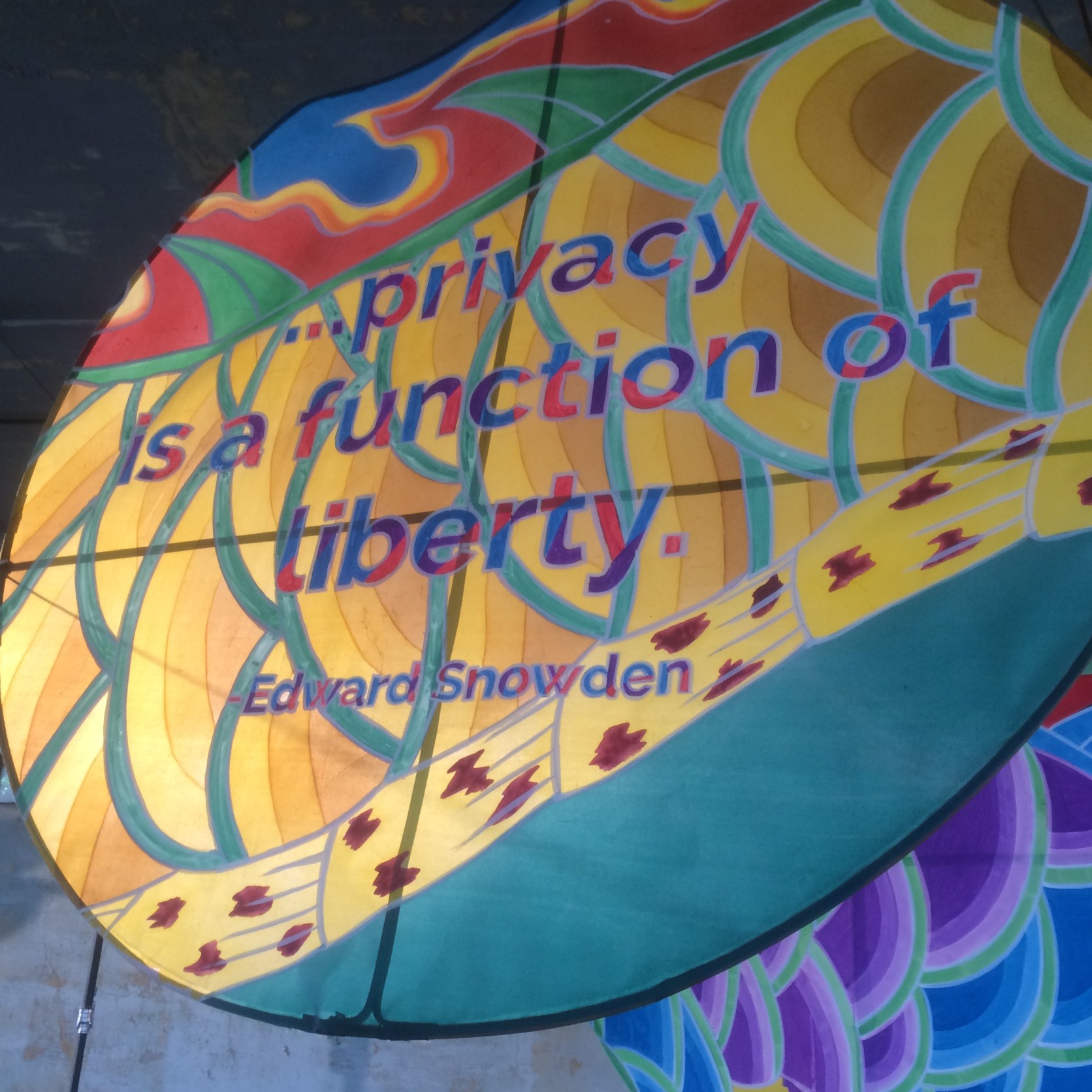
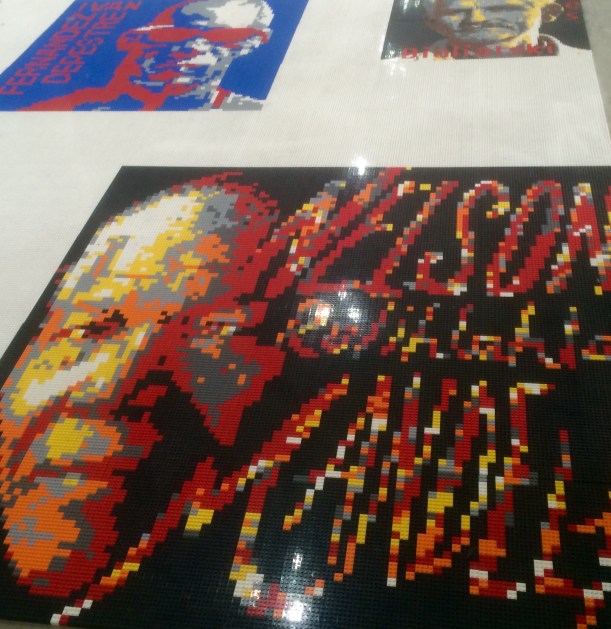
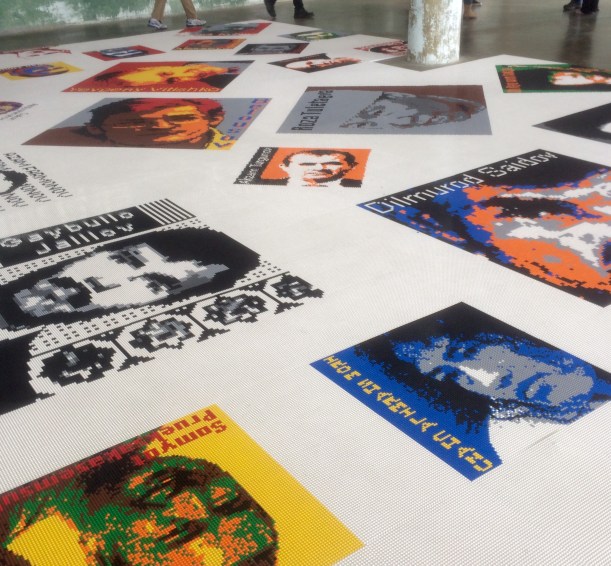
Ai Weiwei at Alcatraz – Easter, April 5, 2015
Freedom. Human rights. Those who have sacrificed for those rights.





The Law Firm of the Future – Will There be Robots?

 Followers of technology know that AI (Artificial Intelligence) and the invasion of the robots is a trending topic. One of the themes is that the robots are coming and they are going to take all of our jobs. Venture capitalist, Marc Andreessen, not a fan of the “sky is falling” thinking, tends to tweet humorous quips about the looming robot crisis.
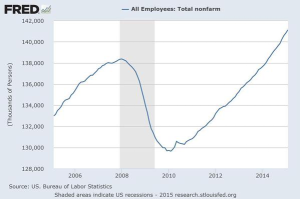
On March 6th, when the latest employment data were released, Andreessen tweeted the chart below with the comment, “The robots are really dropping the ball.”
A few days earlier I had attended a panel on “The Law Firm of the Future” sponsored by CodeX and the Palo Alto Area Bar Association. CodeX is a multidisciplinary laboratory operated by Stanford Law School and the Stanford CS Department.
The arc of the meeting was set by the first speaker, Vivek Wadhwa, who presented research on the results of IBM’s Watson AI Engine in diagnosing cancer. Watson’s successful…
View original post 507 more words
 Creekside